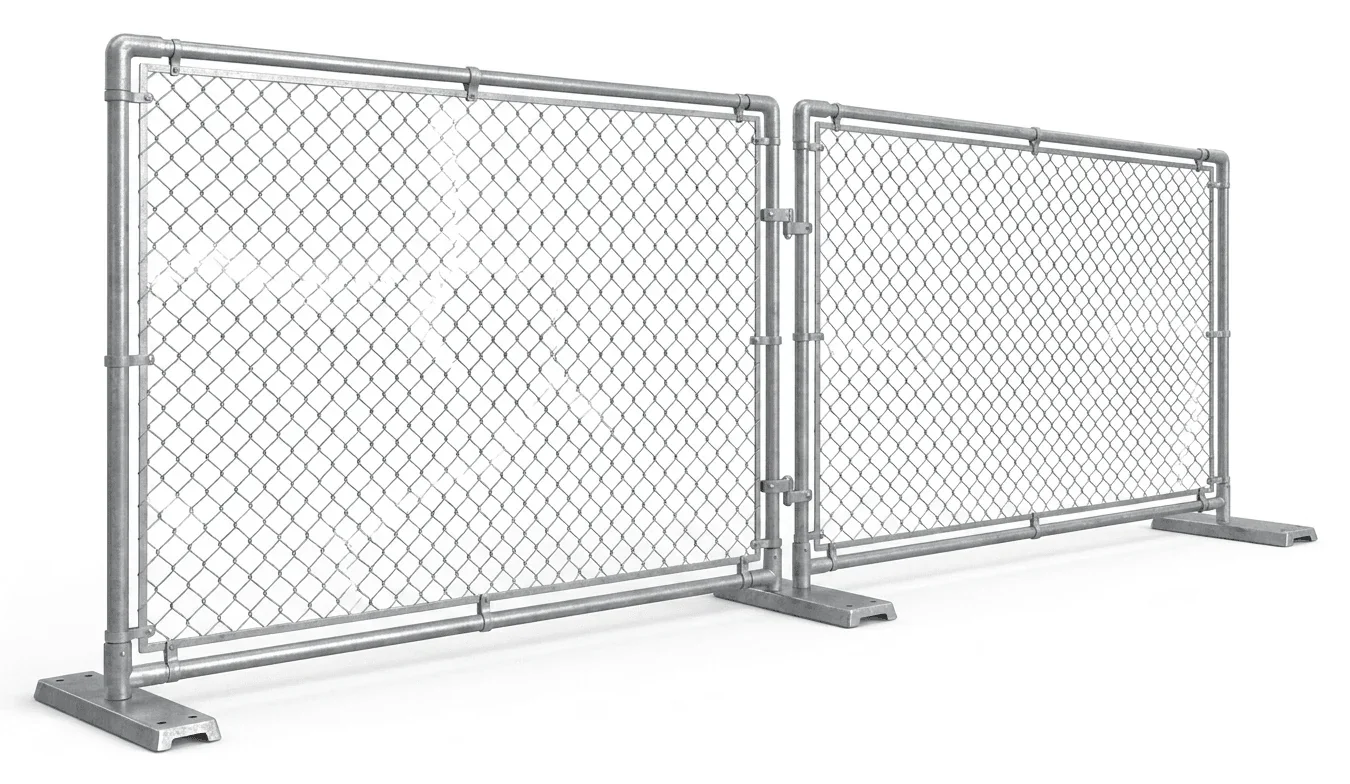
Begin with boundary length, ground condition, and exposure. Austin’s ridge-to-plains transition affects panel stability, site-stability factors strategy, and how gates align over time.
Temporary barriers define work zones around active lift routes, materials yards, and pedestrian edges. In Austin, wind corridors along the hill transition and soft east-side soils change how panels stand and how long alignments stay true. Plan the line, then confirm what the surface will do after a rain or a week of heavy truck traffic.
Line layout and site geometry
Where will lifts and deliveries cross? Gate width and swing must clear the largest load path, including counterweights and outriggers.
Can the barrier sit below the task or does it need to remain flush with a slab edge? Height changes affect stability and site-stability planning options.
What is the turn radius for material handling near corners? Avoid layouts that force tight maneuvers against panels.
Ground and exposure in Austin
West-side slopes and rocky cuts around the escarpment make site-stability planning decisions sensitive to uneven pads. Panel feet may bridge gaps; site-stability factors placement then governs stability.
East-side clay can soften after storms, letting bases tilt. Expect re-leveling needs where haul routes pump water into the subgrade.
Downtown canyons funnel gusts between structures. Straight, uninterrupted runs of panels are more exposed; staggered layouts can reduce sail effects within site constraints. Actual conditions and site procedures govern.
Pedestrian and vehicle interfaces
For sidewalks near interior fit-out, low-profile barricades reduce trip exposure while keeping lift aisles marked. See /electric-scissor-lift-rental/ for typical aisle widths.
For rough-terrain lift zones, heavier barricades or fence lines with additional site-stability factors match the equipment scale. Related lift considerations appear at /rough-terrain-scissor-lift-rental/ and /aerial-lift-rental/.
Logistics and handling
Access path for panel delivery: note curb heights, service ramps, and elevator capacities if staging inside a structure.
Storage footprint: stacked panels and bases require a dry, flat laydown to prevent warping and to keep hardware organized.
What to measure before calling
Total linear feet, gate count, and largest opening required.
Ground description along the run, including slopes and soft spots.
Expected wind exposure from nearby openings or ridgelines.
Equipment questions
Questions about Austin planning
How does the escarpment affect fence stability?
Uneven, sloped ground increases the chance that bases won’t sit flat. Stability then depends more on site-stability factors and how the line steps with grade than on panel height alone.
What fencing works near high-rise interiors downtown?
Compact barricades and shorter panels fit better in tight corridors, especially where elevators and dock ramps limit handling space.
Will panels shift after a week on clay soils?
They can. Soft ground under repeated traffic may settle, changing panel plumb and gate alignment. Plan for periodic checks where haul routes cross the fence line.