Define the load case
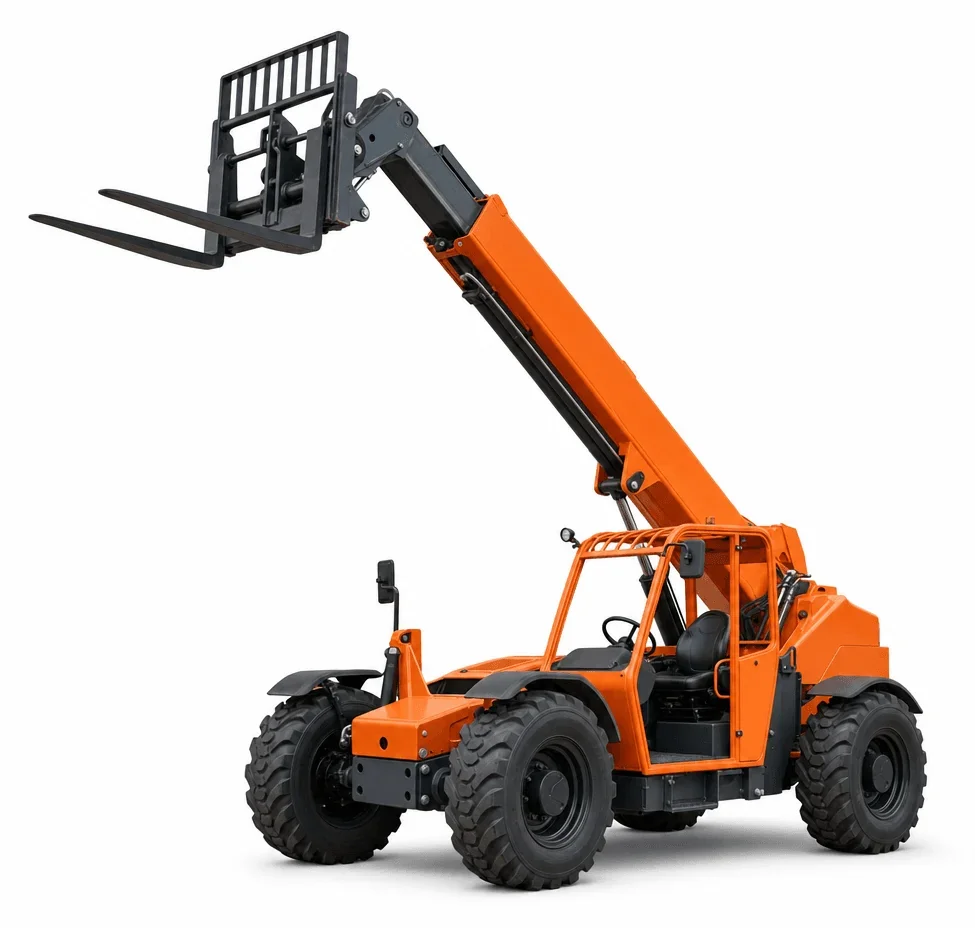
Identify the heaviest load and the maximum horizontal reach where it must land. Capacity charts drop quickly as the boom extends. If your farthest reach is light but close-in picks are heavy, a mid-size machine may still work; if both are high, step up a class. For vertical-only lifts inside tight aisles, see /forklift-rental/.
Ground and approach in Austin
- Western grades and cut rock: prioritize rough-terrain tires, 4WD, and ground clearance to move materials from laydown to structure.
- Eastern pads and stabilized subgrades: conventional rough-terrain tires often suffice, but confirm soil bearing under travel paths and staging.
Curbs, utility trenches, and temporary ramps around local distribution buildings can force longer boom reaches from less-than-ideal angles. Measure gate widths, scaffold clearances, and swing room for turning with a load.
Carriage, forks, and attachments context
Side-shift and tilt carriages help place loads within tight facade openings. Pallet fork length should match load depth to avoid overhang that pushes the center of gravity forward. If you need personnel access at height rather than material placement, compare against /boom-lift-rental/ for aerial tasks.
Heat, hydraulics, and cycling
Long days in Austin’s summer raise hydraulic temps, which can slow cycling when you shuttle loads continuously. Plan placement sequences and breaks to keep productivity consistent during peak heat.
Communication and visibility
Blind placements into interior bays or behind facade lines benefit from spotter visibility and clear laydown zones. Site procedures determine signaling methods and exclusion areas.
Details to have when you call (512) 862-9765
- Heaviest load weight and dimensions
- Farthest placement distance and height
- Surface conditions along the travel route
- Tightest gate/door, turning radius, and ramp grades
- Need for side-shift/tilt carriage or extended forks