Define the job geometry first
- Can the unit sit below the task or must it be level with it? Light towers need stable, level ground to aim without drift. Generators perform best when their pad resists settling.
- How far is the power run? Longer cable runs add voltage drop; place the generator close enough to keep conductors within rating.
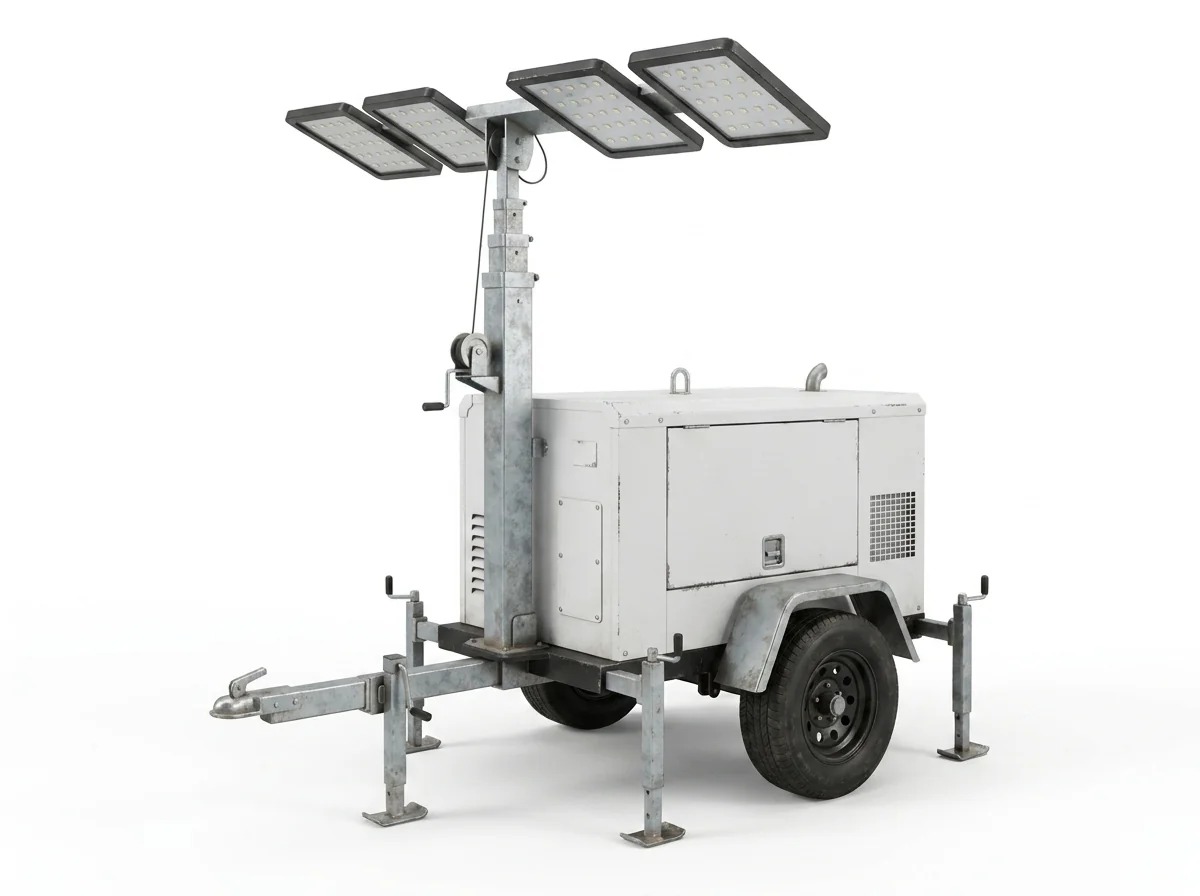
- What needs illumination: a wide staging yard or a focused work face? Light head height and mast rotation determine coverage.
Local ground and access patterns
Austin’s west-side sites near the escarpment often combine slope, rock, and uneven access roads. Towable towers or skid-mounted gensets may need 4WD support equipment to reach a flat pad. East-side projects on clay tend to offer smoother haul routes but may require cribbing or mats to prevent settling after a rain. Staging near high-rise cores downtown can mean tight turns, ramp approaches, and limited laydown; plan for small-footprint towers and compact gensets that can sit clear of lifts and material routes.
Heat and runtime planning
The regional climate pushes daytime temperatures that stress cooling and hydraulics. For generators, ventilation around the unit and realistic load factors influence fuel intervals and downtime. For towers, hydraulic masts and fixtures may need cooldown windows per unit guidance. Night work around data and distribution facilities often prefers quiet or electric options near occupied interiors; confirm decibel requirements and emissions limits by workspace type.
Output and coverage ranges
- Generator sizing: calculate total running watts plus starting surges from lifts, welders, and site power tools. Keep headroom for simultaneous loads rather than peak-switching plans that exceed rating.
- Light coverage: compare mast height and number of fixtures to the working footprint. Taller masts reduce shadowing around stacked materials and formwork.
- Transport: verify hitch class, site turning radius, and whether the delivery path includes curbs, steep aprons, or garage clearances.
Related lift planning
Power and light often support elevated work. If the task is indoors around sensitive finishes, see /electric-scissor-lift-rental/. For exterior slabs or uneven ground, see /rough-terrain-scissor-lift-rental/ and /boom-lift-rental/.
Austin-specific notes
- Escarpment transitions can concentrate wind at ridge gaps. Mast stability and aiming drift are influenced by gust patterns; actual conditions and the unit’s instructions govern placement.
- East-side clay can pump water after storms, increasing sink risk under outriggers or jacks. Confirm bearing capacity of the pad before setting masts or skids.
What to have on hand when you call
- Target load in kW or amps and types of tools/lifts.
- Desired light levels and area dimensions.
- Site surface description, slope estimate, and approach constraints.
- Expected runtime window and fuel access.